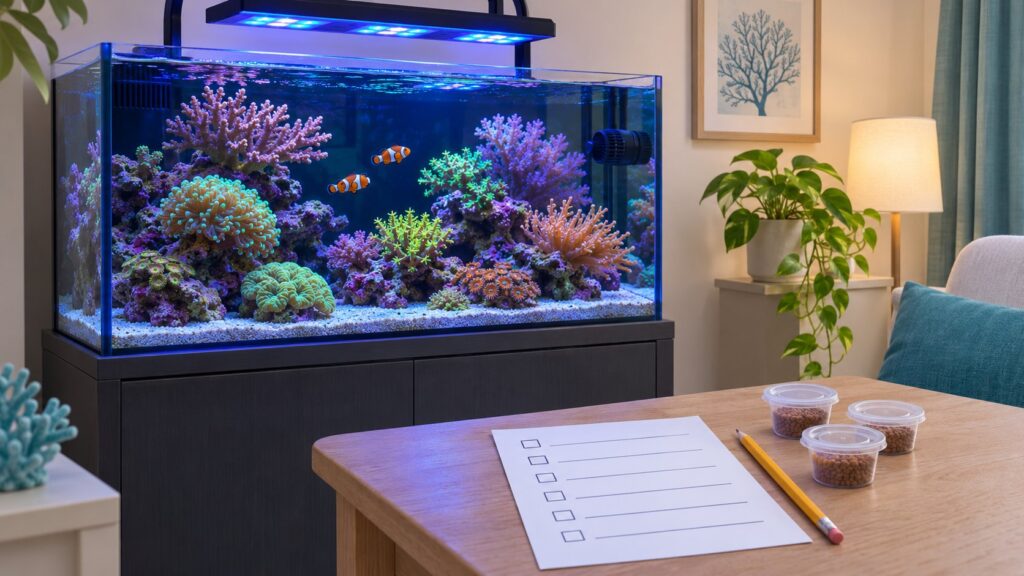
Reef Tank Vacation Checklist: Instructions for Your Tank Sitter
Leave clear instructions, measured food, and a calm plan for daily checks—without asking your sitter to improvise.
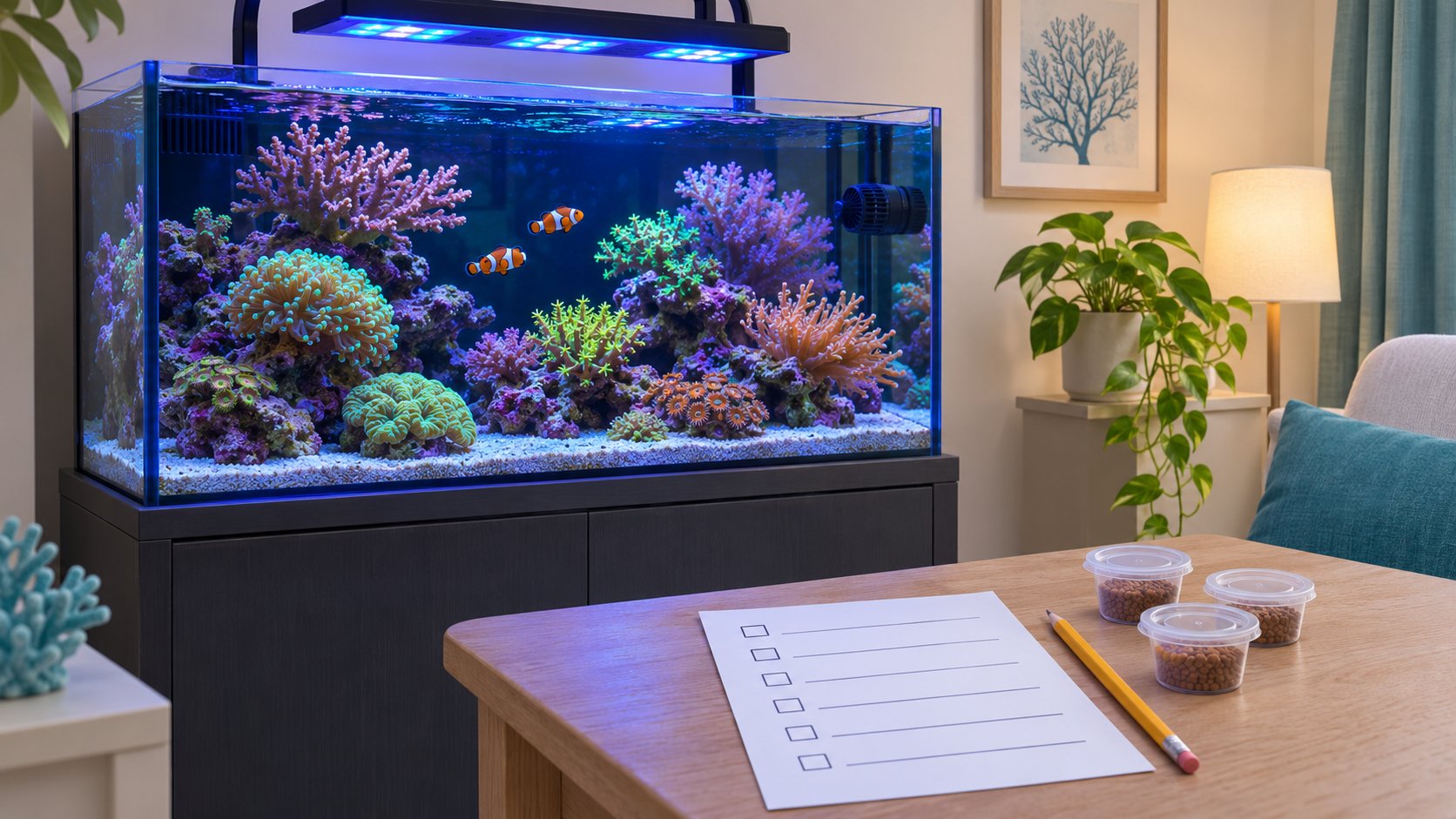
Unpublished owner-review draft. Check tank-specific instructions and sources before approval.
A reef-tank sitter needs a short, tank-specific routine. Prepare written instructions and demonstrate them before you travel. The checklist below supports your established care plan; it is not a substitute for species-specific husbandry or veterinary advice.
Before leaving: make routine care easy
- Write down your normal temperature range, target water level and the checks your tank needs. Demonstrate where to read them.
- Prepare measured food portions matched to your livestock and usual feeding schedule. Avoid asking a sitter to estimate a handful or add extra food.
- Label purified freshwater for evaporation top-off separately from mixed saltwater for water changes. Replacing evaporation with saltwater raises salinity. Follow your established top-off procedure and equipment instructions.
- Show the sitter how to recognize normal circulation, return-pump operation and livestock behavior. Leave safe instructions for an unexpected leak or equipment problem.
- Leave your contact number and a knowledgeable backup contact. Ask the sitter to call before dosing products, changing equipment settings or attempting unfamiliar maintenance.
Daily sitter checklist
Observe, record, and call. A sitter should follow the demonstrated routine and report unexpected changes rather than attempt unfamiliar treatments.
- Observe fish and other livestock for unusual behavior, breathing or visible distress.
- Read the thermometer and compare with the owner’s written range.
- Check water level, circulation and any owner-specified equipment indicators.
- Provide the prepared feed according to the tank’s instructions; remove uneaten food using the demonstrated method.
- Record the checks and promptly report anything unusual. Do not wait for the next scheduled visit when livestock appear distressed.
Frequently asked questions
Do I need a sitter if I have an automatic feeder?
A feeder supplies food; it cannot replace checking water quality, circulation, leaks and animal health. The length of an absence, livestock and system reliability determine the care arrangements needed. Test your existing equipment in advance and arrange appropriate human checks.
Write down your tank-specific instructions
Fill in these details before departure. The blanks are prompts for the owner, not universal aquarium targets.
| Instruction | Owner supplies |
|---|---|
| Normal checks | Temperature range, water-level mark, and equipment indicators |
| Feeding and top-off | Demonstrated amounts, labeled supplies, and exact schedule |
| Who to call | Owner, knowledgeable backup, and instructions for urgent concerns |
Useful guides for your tank’s written instructions
Sources and review notes
Reviewed November 22, 2026: Merck Veterinary Manual: Essential Maintenance supports daily fish, temperature, equipment and feeding checks. American Veterinary Medical Association: Selecting a Fish discusses arranging care during absences. Bulk Reef Supply: Saltwater Aquarium Evaporation explains freshwater top-off. This is a practical planning checklist, not a claim of owner testing. Product recommendations and affiliate links have not been added.