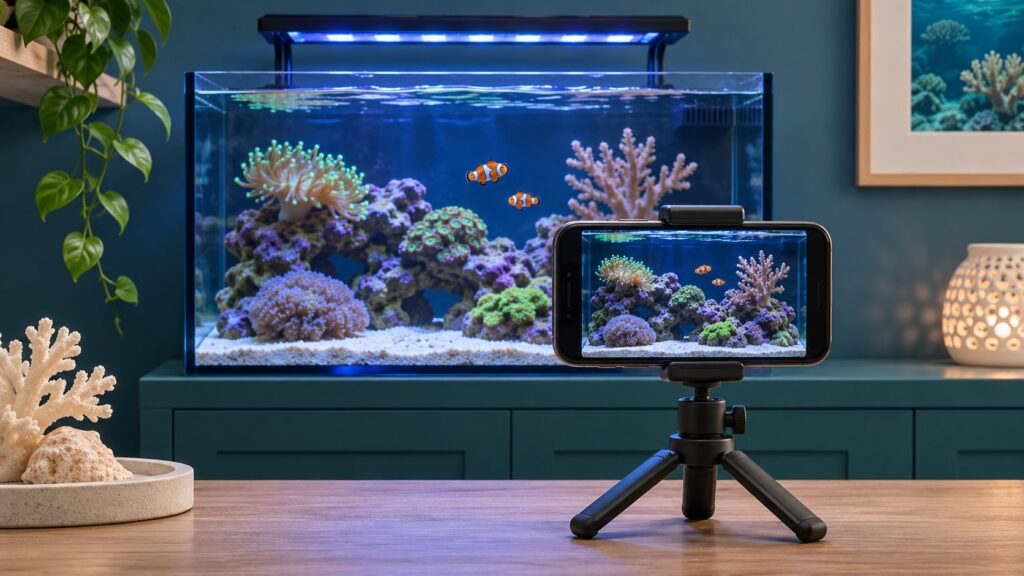
How to Photograph Your Reef Tank for Useful Progress Records
Make your phone photos useful records of change. Keep framing consistent, reduce reflections, and pair each picture with clear notes.
Unpublished owner-review draft. Check tank-specific instructions and sources before approval.
A useful reef tank photograph does not have to look like a magazine cover. For a beginner, its most valuable job is helping you remember what the aquarium looked like on a particular day. A consistent series can document the aquascape, coral placement, visible growth, and the sequence of changes you made.
This guide focuses on repeatable records with the camera or phone you already have. Photos support observation; they cannot establish water chemistry, identify every disease, or replace direct examination and appropriate testing.
Choose a repeatable view
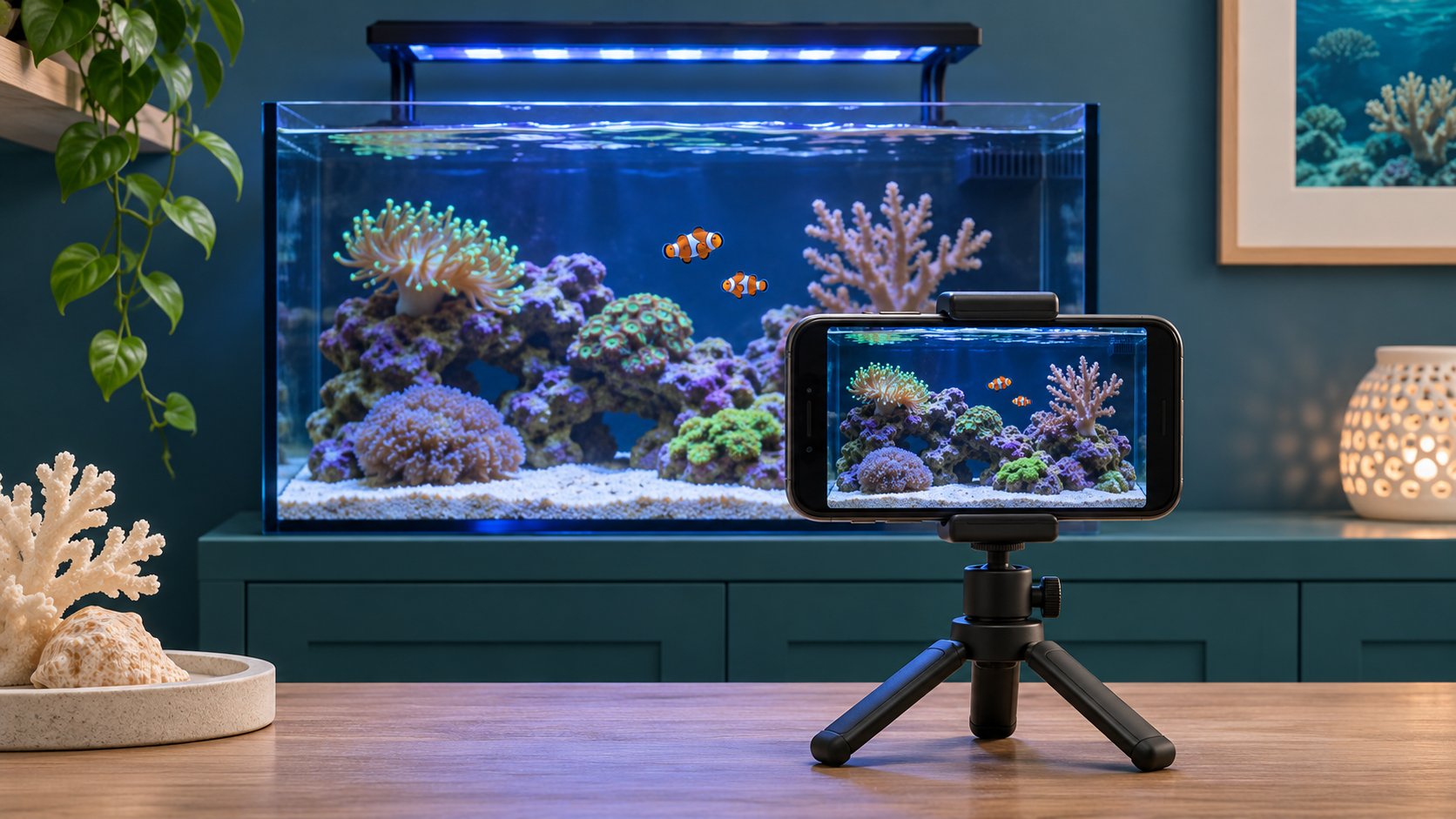
Pick one place to stand and take a full-tank picture from approximately the same height and distance. Include the tank edges or another fixed reference so you can reproduce the framing. Then take a closer view of any coral or area you want to follow over time. Give each subject a consistent name, such as “left rock, upper frag,” instead of relying on memory.
Reduce reflections without changing the aquarium
Clean your camera lens and wipe the outside of the viewing panel with a suitable cloth. Reduce distracting room reflections when practical. Start with the camera flash off: Nikon’s aquarium photography guidance explains that flash can reflect from aquarium glass. Keep the camera, cables, and other electronics dry, and avoid leaning equipment against an unstable surface.
Use your normal aquarium lighting schedule. There is no need to alter livestock care or make the tank brighter just for a record photograph. If the picture is blurry, steady your hands or use a stable support outside the aquarium. Do not move animals, disturb corals, or stop essential circulation to obtain a cleaner-looking image.
Make comparisons fair
Try to photograph at a similar point in the lighting schedule. Record whether you used an automatic mode, an optional lens filter, or an editing adjustment. Keep the original file as well as any edited copy. Avoid treating a more saturated photograph as evidence that a coral became healthier: lighting, exposure, filters, and editing can change its appearance.
| Record | Example |
|---|---|
| Date and time | Tuesday evening, during the usual lighting period |
| View | Full tank from the front; close-up of the left rock |
| Camera notes | Same phone, flash off, no color editing |
| Recent changes | Water change, equipment adjustment, or new placement |
| Related observations | What you noticed directly, recorded separately from interpretation |
Pair photos with written records
Use dated folders or filenames and keep a second copy somewhere you can retrieve it. Add a short note describing what changed and what stayed the same. The Reef Tank Journal is a related recording tool; retain your own copies of important records rather than relying on one browser or device.
Continue the practical checks in the maintenance guide and the water testing guide. A photograph is one part of the record, not a substitute for measurements.
Frequently asked questions
Do I need a new camera or a special filter?
Start with what you own. Consistent framing and clear notes are more useful for this purpose than buying equipment. If you later use a filter, document it and do not compare the filtered image with an unfiltered one as though the conditions were identical.
How often should I take a progress picture?
Choose a manageable routine, such as a weekly overview, and add dated pictures around changes you want to document. This is a record-keeping suggestion, not a livestock-care schedule or a guarantee that photographs will reveal a problem.
Can a photograph tell me whether a coral is healthy?
Not reliably by itself. Use the image to describe a change, then consider direct observations, water tests, husbandry history, and qualified help when needed. Avoid making a diagnosis from color alone.
Reference and review notes
Camera reference: Nikon Digitutor: Aquarium photography, reviewed November 24, 2026, supports the flash-reflection explanation. The record-keeping routine above is an editorial suggestion, not a product test or a claim of personal experience.